Destroy This Temple
Jesus cleansed the temple twice because God's worship must not be diluted by convenience or selfishness. His body became the ultimate temple, the only way to worship God.
Primary Verses
Opening Prayer for Evangelistic Zeal
That would supersede biases, prejudism, nationalism. That you would give us a desire that you have that none should perish, but that all should come to repentance.
I pray, Lord God, that we would look at you, your heart, your attitude, why you came, what you did. And then, Lord God, love like that. God, Lord, there's
Lay down the things in your heart and the things in your mind and the trauma and the hurt and the sin and the pain and the idolatry that separates us from true worship. And let's hold it in our hand and worship today and remember what Jesus did for us. For me to live is Christ. For me to die is gain. I'll lay my flesh aside. Till only he remains. His resurrected life. Brought death to all my sin. I publicly declare. My life belongs to him.
Crucified with Christ. Jericho, you bless the bread. Give thanks for the body of Christ. Father God, we just come before you. You never deserve a body
For us. Hearts of worship. As we take. In this communion and remember all that you've done for us and not just for us, but everyone that we come in contact with. Lord, thank you. In Jesus name.
Don't you love how Jesus knew we'd need this? He broke this bread and he held it up and he said, hey, this is my body. It's broken for you. The bread. Ed, would you bless the bread, give the juice and give thanks for the blood of Christ.
Lord God, we do love you, Lord. Lord, we love you. We recognize this drink that we drink represents the blood of Christ, which is totally innocent, Lord, innocent of all sin.
And it's through this blood that we are cleansed Lord. Our sins are forgiven. Thank you, Lord. Thank you for this kindness that you've shown to us. Lord, I pray that for everyone who partakes of this drink. Lord. Lord, that they recognize that this sacrifice came with a price, Lord, and we do love you in Christ's name. Amen. The disciples didn't know when Jesus held up this cup, but Jesus knew. He knew he was going to give his blood. He was going to set us free. He held up this cup and he said, this is my blood, which is poured out for the sins of many. That's us, the cup.
So if you, if you worshiped and you held this number one living and healed lot of the church from ten years, this world to you. Thank. set us free. So let's stand up and sing about it. Jesus, thank you. Thank you, thank you, thank you for dying on the cross for us and raising up yourself on the third day so that we could be free and know, Lord, that you're on the right hand of the Father, advocating for us, interceding for us, Lord, because we know we are a broken people, Lord. We don't worship you like we should. We let other things get in the way, Lord, and we shouldn't, Lord, and we're sorry, but we are thankful that you made a way for us to be forgiven and free right now as we walk out of this building.
We are clean and holy, made right by your blood. Thank you for this. We love you. Amen.
The Temple Cleansing: A Passage for Every Gospel
Many in this world, not just in Iran or not just in our country, not just in Israel, not just in the countries immediately affected by this conflict, whatever it is, but in every nation, millions, worldwide billions, billions. I don't know you.
And you're just when you judge. But you're always gracious to save. And I pray that you would save, dear God. I pray that through things like this, where there's obvious some judgment,
That you would draw men and women to Christ. You'd show them their need for you.
That, Father, your word would be spoken on radios and TVs and computers and phones and every avenue. And we have that we would share your word, the Gospel, the good news with those who are lost. And we can do it around the world. I pray that you'd help us.
And I pray, Lord, that even as we look into your word this morning, you'd speak, because nothing can happen if you don't speak. So be gracious. And, Lord, I love you. And I pray in Jesus' name. Amen. So we're going to have this interesting little passage. It's a pretty common passage. I mean, if you've read your Bible, Bibles very much, if you've been in church very much, I'm sure you've heard this passage before. But what's so interesting about this passage of Scripture is that this cleansing of the temple, is what they call it, is in every Gospel. Matthew, Mark, Luke, and John. Matthew, Mark, and Luke, it's at the end of Jesus' ministry. Matter of fact, each of those accounts is after Jesus has ridden down through the Mount of Olives from the Kidron Valley and into Jerusalem on the donkey's colt.
False Hopes: Earthly Kings vs. The True Savior
Amen. Amen. Amen. They're singing Hosanna in the highest. And, you know, blessed be he that comes in the name of the Lord. And they're praising Jesus. And they think that he's going to come and reign in Jerusalem, become an earthly king. Man, they're all excited about an earthly king. Who isn't, right? If we just get the right king on earth, all will be well. Isn't that right? That's how we live many times today, right? Just get the right president, get the right leaders, and everything will be well.
Jesus knew better, right? He wasn't going to Jerusalem to become an earthly king. He was a Savior, a sacrifice.
The Passover and God's Redemptive Power
Well, this is recorded at the beginning of Jesus' ministry. I mean, this is recorded right after the first miracle that Jesus ever did. He went to Cana to a wedding, and they brought him some water that he turned into wine. Right? We remember that one. That's an easy one to remember. That's an easy one says that it was the time of the Passover, and Jesus went up to Jerusalem. So, this is early in his ministry. And, you know, if you're a studier of your Bible, you'll hear things, read things that people say, well, this is just John moving the cleansing of the temple from the end of Jesus' life to the beginning of his life for, you know, make some points and bring some
Things out. And, you know, I mentioned even this morning that, you know, some of you are going to get your study Bibles out, and you're going to read your notes, and you're going to determine how this looks, right? Because study Bibles are the answer, aren't they? I mean, you realize, don't you, that the stuff under the line in your study Bible is not inspired.
It's not inspired. It's the stuff above that that's the Word of God that's inspired. And there's going to be somebody in your study Bibles that are going to tell you that, yeah, this is out of place, and it's okay that it's out of place, blah, blah, blah. There's going to be others that say it's not out of place. And can I just say that? Can This is the Word of God.
It is inspired cover to cover. God breathed cover to cover. If this is in the early part of his life, that means he cleansed the temple twice. Once once in the last part of his life. And you ought to pay attention to that, because that's important. Because this speaks to us about some stuff that I think we ought to be a little more passionate about. And we'll talk about that in a minute. But here's Jesus. They don't really know him. He's not known. Right? He's early. He's not really done anything to call attention to himself other than this miracle at Cana. And very few people even knew about that miracle. But now he's come to Jerusalem, and what it says about him is pretty simple, right?
Convenience Over Worship: The Heart of the Problem
It's the Jewish Passover, and he went to Jerusalem, and in the temple he found people selling oxen, sheep, and doves, and he also found the money changer sitting there. All these things are pretty normal. If you will. It's the time of the Passover. This is an extremely important time in the life of Israel. It's to commemorate what God did to deliver them from Egypt many years earlier. It's one of the three high holy days that all the men in Israel are required to go to Jerusalem to worship at. They're required. Matter of fact, if you were a Jew, you were required to come from wherever you were living. You were supposed to go. This is important.
It's important to God, the Passover. The Passover, if you'll remember, came after Israel had been in slavery in Egypt for 400 years. God comes to Moses and said, I've heard the cries of my people. I want you to go to Pharaoh. Tell Pharaoh to let my people go so they can come worship me. But Pharaoh's not going to let them go because I want to show the people of Egypt and the world that there's only a God in Israel, right? He's powerful. He tells Moses, Pharaoh's going to harden his heart. He's not going to let the people go. And I'm going to do these powerful displays of my glory so everyone will know I'm God.
And so he goes through nine different plagues. You can read about those in the book of Exodus. It comes to the 10th plague. And God says to Israel, my last plague is going to be against every family from the Pharaoh to the slave. And every single family, man and beast in Egypt, they're going to lose their firstborn. They're going to die under my hand of judgment that they might know that I'm God because of all their rebellion and their wickedness and their sinfulness against me.
And if you want to live, if you want your firstborn to live, then here's how you approach this. You take an unblemished lamb. That means a lamb with no broken bones. There are no kind of obvious defects or open sores. You're going to slaughter that lamb and you're going to take some of that blood and you're going to spread it over the doorposts of your house and over the mantle of your house. You're going to take that lamb inside and you're going to roast it and you're going to eat it with all your clothes on, with your traveling clothes on because in the morning you're going to leave Egypt.
Jesus' Righteous Anger at Desecrated Worship
It's one of the most powerful pictures of salvation. Through a blood sacrifice that you're going to find in the Bible. It's powerful. Because sure enough, that night in Egypt, everyone from the Pharaoh to the slave lost their firstborn. Everyone. There was weeping, wailing in Egypt because they refused to humble themselves before God and experience his judgment. But in Israel, none. No more. No one. No one died.
You want a contrast for you? You want to know why we have a heart for people today? Regardless of where they are, what they've done. The contrast. Death. Life. It's a powerful contrast. Jesus goes to Jerusalem. They're there because of what God has shown them. How God has delivered them and how the blood had saved them. And we're calling God's great deliverance through the unblemished lamb. And Jesus goes to the temple because that's where you go. When you're going to go to these great high holy days, the temple and you're going to worship. You're going to make sacrifices. You're going to pray. You're going to sing. You're going to give God the glory. You're going to walk with God.
John 2:15 9:43"And making a whip of cords, he drove them all out of the temple, with the sheep and oxen. And he poured out the coins of the money-changers and overturned their tables."
The Court of the Gentiles: God's Inclusive Vision
He deserves it. Because he alone is the Savior. That's what this sacrifice says. That's what this high holy day is. God's the Savior. He deserves the glory. And he walks in and he sees oxen, sheep, and doves. He finds money changers sitting there. And it says, after making a whip out of cords, he drove everyone out of the temple with their sheep and oxen. He also poured out the money changers' coins and overturned the tables.
Now, I want you to think about this because it's too important. No one but Jesus was upset about the sheep, the oxen, and the doves. No one was offended by the money changers. No one considered it. They didn't give it a different thought. It was just part of what was happening. It was a part of what they decided could happen within the temple. And the simple answer is, no. The explanation for this was that it was convenient.
Right? When you were coming into Jerusalem, whether it be from farther south in Jerusalem or farther north into Galilee, if you were going to bring your animal with you, you were going to have to drive that animal along with you or haul it along with you or have the hassles of dealing with it when you sleep overnight. Where are you going to put it and deal with all this stuff? And many came from other countries. It'd be like coming from North Dakota or Miami. Montana or Nebraska or Colorado. You're a Jew, but you're living in a different country, and you didn't want to have to bring your sacrifice. That's just a whole lot of work.
It's a lot better to make worship convenient, isn't it? It's nice to have convenience in worship. And so rather than driving your animal, they decided, hey, we're going to bring some animals to the temple. We're going to sell them. We're that people can come and worship conveniently.
Money changers. There was a temple tax, half a shekel, that went along with these type of celebrations and worship. And so it had to be brought in a shekel, half a shekel. So if you're coming from a different country, you would have to have a currency exchange, right? How many of you traveled overseas? If you go to somebody else's country. They may not take dollars. I grew to hate London. Because you'd fly into London. You'd have a 12, 16, 24-hour layover. And you'd go to exchange your money and give them a $100 bill, and they'd give you 55 bucks back.
That is lousy. And then it's super expensive. Like, and they talk funny. I don't want to come through here.
But it was convenient. Right? You didn't have to find a way to exchange your money somewhere else. You could go to the temple, and you could exchange your money. It's convenient. I mean, how many of us love convenience? I promise we love convenience. How many of you are hot? cold? How many of you want to tell me to turn it up? down? I hear that all the time. Holy cow, I don't want to be too hot worshiping Jesus. Certainly cold. Man, Pastor, I'm freezing. I'm freezing. I'm so sorry.
You live in Wyoming. Bring a coat. We have nice soft chairs, too, don't we? Aren't they nice? Holy cow, my backside. Whoa. That dude feels good in that chair.
We like convenience. We like when the music is good, don't we? We really hate it when the music is bad. Don't we? Because how can we really worship if the music's not good? Ugh. When you talk about the priesthood. I hope Pastor Mike's interesting today.
I'm not interesting any other day. It's interesting to me that no one cared that they were doing their best to make things convenient for worship. It's very interesting to me because we're really about it. We really want the easiest form of worship. And really what it is is we want the form of worship that doesn't cost. It doesn't cost much, right?
It doesn't cost much. You know, over the years I've heard people actually complain about having two services.
Because, you know, some people have to be here for two services. That's really hard, isn't it? They complain. But they don't ever come ask me why we have two services. Do you know
We have two services because some people will only come to the early service. They will not come to this one. They will not. Does that mean they have pure hearts about it? No. No. If you had a pure heart, you'd come worship whenever you could come worship. It wouldn't matter whether it's early or late. But, you know, we have things to do.
Now, I know that none of you come to the second service because you like to sleep in on Sunday mornings, right? You can't make it to Sunday school because you're still sleeping in at 9 .30.
Kind of tough. Don't ask me to get up by 9 .30 and worship the Lord. I'm about convenience.
See, we're probably all guilty of this is my point. I get it. It's hard sometimes to show up and get up early and be on time and worship the Lord and pay attention and prepare our hearts. And actually consider worship meaningful and powerful and humble and make it about God.
Obviously, we haven't changed since this day, right? But what's even more interesting is Jesus' response to this.
The Cost of Standing for God's Glory
He takes time to make a whip out of cords. That means he braided it. Right? Now, a whip has to have a little bit of weight to it. You can't just have some, you know, loose-fitting cord. You have to have some weight to it. And it wasn't because he was going to be violent. evil. But he wanted to drive these animals out. He made a whip to drive the animals out and to drive these men out that were selling these animals because they did not belong where they were.
Not only that, but he turned over the money changers' tables. He threw the coins on the floor and literally made it so these guys could not stay in the temple. And some people say when you read your commentaries or read your Bible notes, it's because they were cheating people. But it doesn't say that in the Bible.
God wasn't looking for moral reform. It wasn't Jesus trying to make sure they got their P's and Q's done. It was bigger than that. Jesus was offended that instead, instead of worshiping the Father, they had made his house into a marketplace. They were more concerned about the convenience than they were about the worship.
Whatever they wanted to make worship into than they were about worshiping the Father. You see, what really Christ wants in this particular passage is for people to be able to worship the Father. You see, all this would have taken place in the court of the Gentiles. If you know much about the temple compound at that time, they would have had the outer court, the furthest away from the temple, the Holy of Holies, right? The big, tall, 90-foot temple would have been in the middle. On the outside would be the court of the Gentiles, which is an amazing truth for us to understand because God left that court there for people who weren't born Jewish, for people who supposedly were outside of God's people to come and worship the living God.
Why? Because he made them too. Because he had every intention of saving everybody. And so these animals were in the court of the Gentiles. Inside would be the court of the women. That would be for Israelite women to worship. Inside of that court would have been the court of the Israelite men
Would have then been the temple court where they would have the bronze altar where they would offer the sacrifices. And then there would have been the holy place and the holy of holy place where only the priest could go in. And the high priest could go in. All of this worked out, but all of it was designed to worship the living God.
But the guys in charge of the temple, the guys, they were the religious leaders. They not only had such a low view of Gentiles, but they had a low view of God.
God that instead of hearing the sounds of prayers being lifted from the Gentiles, there were sounds of cattle lowing. Instead of people singing in worship to the Lord, there were sheep bleeding. Instead of people there on their faces praising and praying and singing and giving glory to God, there's doves cooing.
The Sign: Jesus' Body as the True Temple
What kind of worship is that? That's not worship. That's selfish. That's not about God. That's about man. Instead of people coming into the presence of the living God, they heard these clanging of the coins and the working through the exchange rate.
That's not worship. Do you think Jesus was okay with that? Do you think Jesus is okay with us turning things into what we want them to be? Do you think he's okay with that? I think I'll just worship when I want to, when it's convenient for me. I'm a little tired this morning. I don't think I'll go.
Pretty easy, isn't it? We got a million excuses. I've probably heard them all. None of them are worth it. You know what's worth it? Jesus. He's worth it. He's worth it. He's worth worship, and it doesn't matter.
You know, we go to these places sometimes God's blessed us to go to, and we've talked about this before, you go to a church in Congo, and they have these little bitty pieces of wood about this high, and I'm not exaggerating. About this high, it's great. They got these, you know, little six-inch, maybe two-by -fours, two-by -sixes, but probably more like one-by -sixes, and they're way down on the ground, and you're like, can I just stand?
First of all, I don't know if I can get down there, and if I get too far away from that one little piece of wood, because the other one's about six, eight feet away, that board's going to hit the ground, or it's going to snap under this dude.
But they show up. They show up. You think it's hot? Sometimes in Congo, inside a metal building, ask Pastor Max. He had a heat stroke one day while we were hearing those things.
You think they don't have anywhere else to worship. Where are they going to go? But you and I were too tired, Cain. We didn't even get out of bed and show up for Jesus. And you think Jesus is just like, oh, you just poor little American, poor little selfish American, poor little self-consumed American,
Poor little self-indulgent American, poor little proud American. It's okay. It's okay. It's okay. It's okay. I understand your selfishness, and I understand your sin. You really think that's the way God responds to us in that selfishness? No. No. What God understands is that he is worthy of our worship. He's worthy. As a matter of fact, if you read your Bibles,
Jesus says, unless you hate your father or mother, sister or brother, son or daughter,
You are not worthy of me. He's certainly not telling us to hate. That's not what he's saying. In that passage, what he's saying is, unless you make me the priority of your life above your family, even the closest ones to you, you're not worthy of me.
You see, we're beginning to talk about drawing near to the resurrection of Jesus Christ. We're going to talk, and I promise I'll get there sometime, about what Jesus said about his death. We're going to talk about that. It's not inconsequential. There's nothing more significant. There's nothing more important in all the world than what God has done for us through his son, Jesus Christ. And because he's given us the ultimate sacrifice, our lives should be lived for him without reservation, without hesitation. He's the Lord, and he's good, and he loves us, and he is worthy of worship. And we play games, don't we?
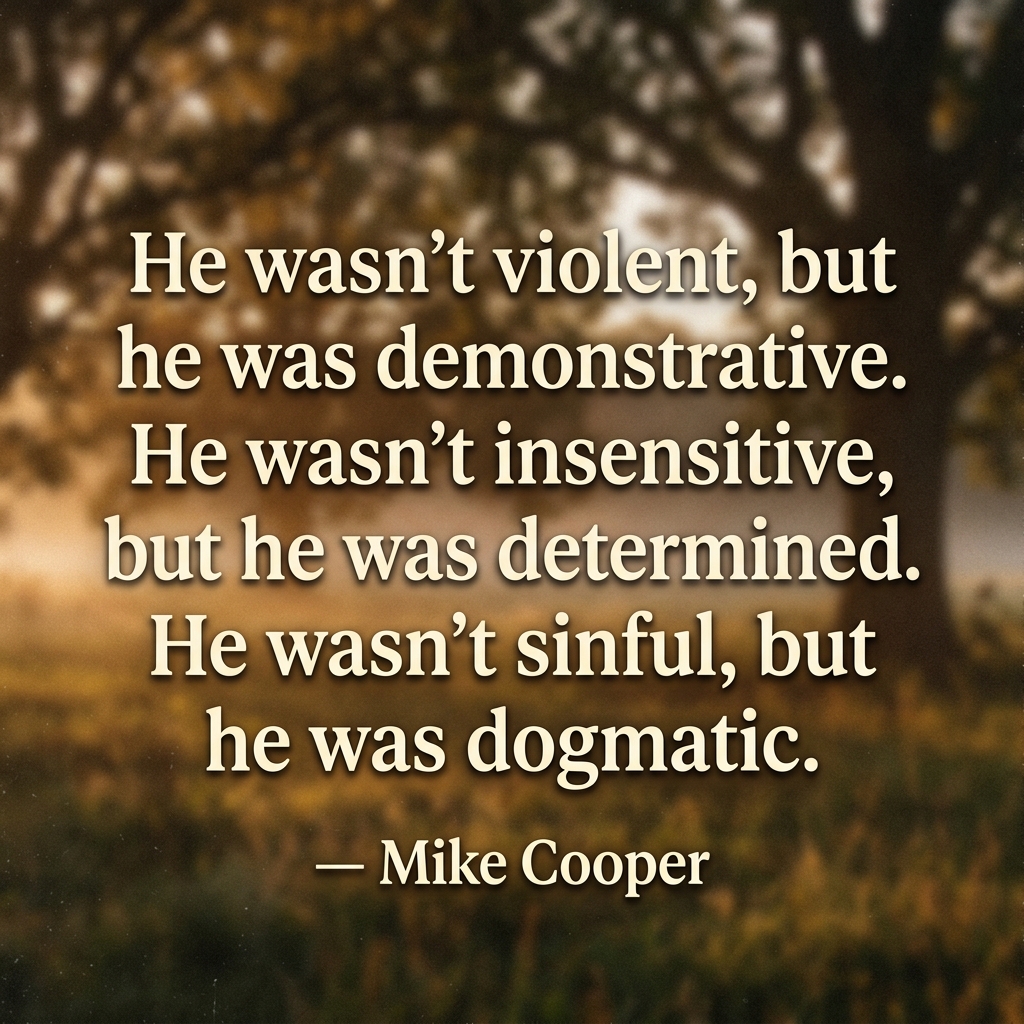
I do. Lord, I'm sorry. And Jesus drives them out. He wasn't violent, but he was demonstrative. He wasn't insensitive, but he was determined. He wasn't sinful, but he was dogmatic. I want you to see a picture of your Savior here. This is who Christ is. I know the world we live in today, if Jesus did this publicly today, man, the world All the different kind of social media would be criticizing him, right and left. He's overbearing, he's judgmental, he's mean-spirited. Man, he doesn't have the right to do that.
Isn't that true? And so, they'd be judging Jesus for standing for God's glory, standing for God's worship. They'd be judging Jesus who took a stance for what is right and true, about how we should respond to the living God. They'd be judging him. And for many of us, that's the reason we don't stand for anything. We're too afraid, aren't we?
Aren't we? Listen, you can't talk about Jesus anywhere and not be criticized. You can't take a stance for righteousness in the church
Stances that say, this is what God's word says and this is the way to respond. You can't respond to him and not be criticized. But man, Christ is working in this situation. He's trying to show them that man, this is the way we worship. This is the way you're called to worship. Matter of fact, he says in verse 16, he told those who were selling doves, get these things out of here. Stop turning my father's house into a marketplace. This is what God's for. This is who God is. This is what we've come for. Do this. He's still screaming it today.
John 2:16 27:08"And he told those who sold the pigeons, "Take these things away; do not make my Father's house a house of trade.""
And there's a ton of rebellious, quote unquote, Christians going, you don't get to tell me anything.
John 2:17 27:28"His disciples remembered that it was written, "Zeal for your house will consume me.""
I don't. But God does. High time some of us listen. High time. Well, let's go a little further. Verse 17 says, and his disciples remembered that it is written, zeal for your, and your house will consume me. And this is a quote from Psalm 69, 9, which is an amazing Psalm. Matter of fact, it's a Messianic Psalm. And Psalm 69, 21, maybe is the most identifiable reference to the Messiah. It says, instead, they gave me gall for my food. And for my thirst, they gave me vinegar to drink. Does that sound like something Christ went through? He's talking about the Messiah. And so we come back to this, this quote here in verse 17. Let me read verses eight and nine out of Psalm 69.
Psalms 69:8-9 28:33"I have become a stranger to my brothers, an alien to my mother's sons. For zeal for your house has consumed me, and the reproaches of those who reproach you have fallen on me."
It says, I have become a stranger to my brothers and a foreigner to my mother's sons, because zeal for your house has consumed me and the insults of those who insult you have fallen on me. In other words, when talking about the Messiah in Psalm 69 verses eight and nine,
He's talking about the Messiah who is so identified with the Father, that by standing for him, serving him, loving him, honoring him, obeying him, it's costing relationships with his family and insults. And he's standing alone because of his zeal for the Lord. Isn't that an interesting picture of our Savior? It costs us something to stand for the Lord. And we don't know whether John was referring to the disciples' understanding of that, at the moment that he did it or after his resurrection, but it doesn't really matter. They understood Christ is going to stand alone for the glory of the Father and nothing was going to stop him.
That's what worship is all about. Seeing God as he is and how worthy he is and how glorious he is and no matter what it costs us, we are going to worship him. We're going to stand for him. Oh, it's high calling, isn't it? Isn't it? Are you with me? Is anybody here?
Are you going to let me stop now so we can get to the restaurant earlier?
One Way to Worship: Through Christ's Sacrifice
Guys, don't think we're not part of this. Don't think we don't battle this stuff. God's not calling us to live a selfish life. He's calling us to live for him. And when we do, we have the blessed, happy life. We're so fortunate. We're so blessed.
Well, it cost Jesus some too. Verse 18 says, So the Jews replied to him, What sign will you show us for doing these things? And it seems like a strange question to ask because, you know, why aren't they saying, Hey, who do you think you are? Well, that's what they're saying.
John 2:18 30:31"So the Jews said to him, "What sign do you show us for doing these things?""
By what authority do you do this? Show us a sign that says either you're sent from God, or maybe you are God. Show us a sign.
Because, man, at some sense, no one should be able to come into the temple of the living God and dictate how worship is going to be done without having some authority, right?
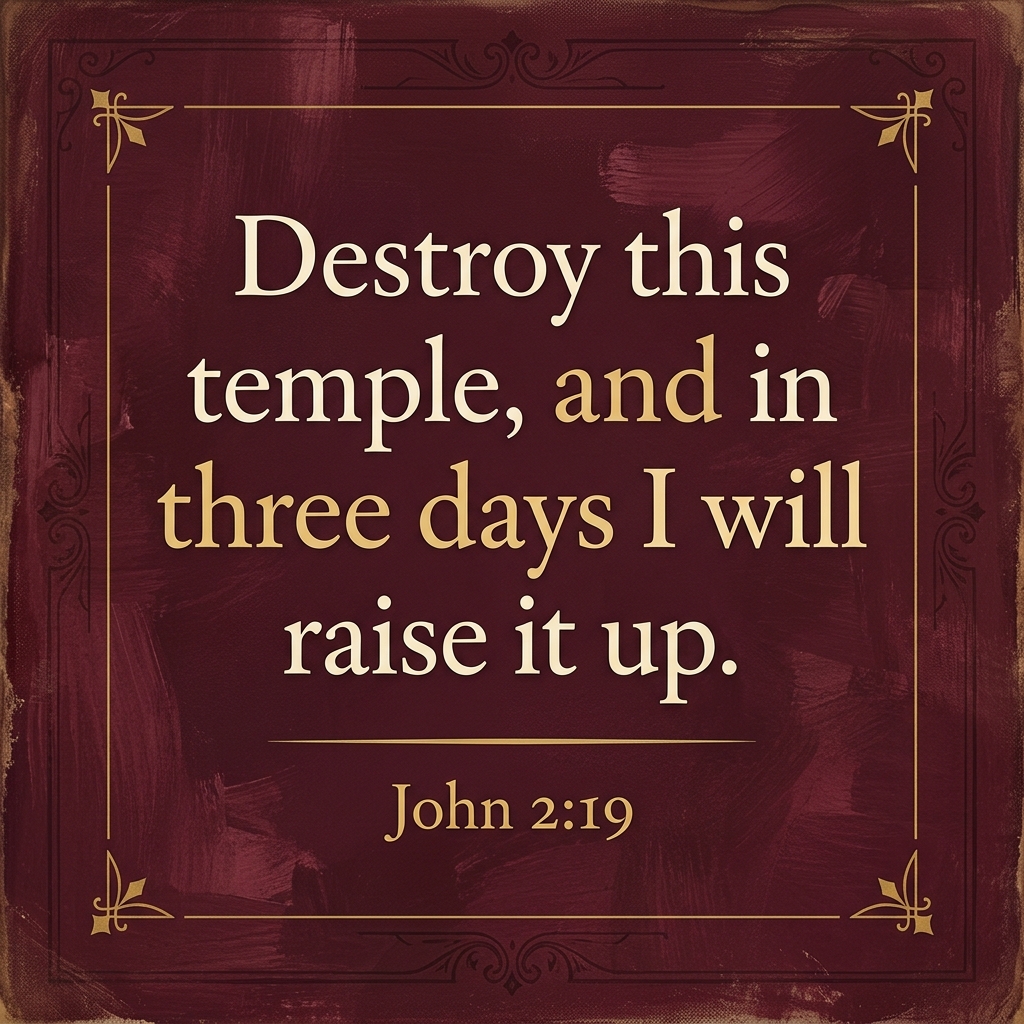
Well, I love what Jesus says. He says, destroy this temple, and I'll raise it up in three days.
John 2:19 31:21"Jesus answered them, "Destroy this temple, and in three days I will raise it up.""
I'm sure these guys were looking at him, like, you're an idiot. You don't think they were? I know the Bible is so sanctified that men weren't really men, right? No. These guys, they probably looked at him like, are you kidding me? Matter of fact, it tells us. It took 46 years to build this temple, and you think you're going to raise it up in three days?
These guys, they were pretty clueless. They were pretty much like us. We don't really walk in the Spirit that well, do we? You walk in the Spirit very well? Are you more adept at walking in the flesh? Right? He's like, tear down this temple, and I'll raise it in three days. And they went, this building?
This immaculate, beautiful building? Ornate, powerful, huge stones? I mean, this is a building like you and I can't even imagine.
You're going to tear that thing down, and then you're going to raise it up in three days. There's no way humanly possible you're going to do that.
But these guys reveal some stuff that is kind of sad. Like, they weren't really concerned about what Jesus was saying about pure worship.
They were just concerned about authority. They could have heard Jesus. They could have heard him say, why are these cattle here? Why are these sheep here? Why are these doves here? Why are you exchanging money?
This is a place of worship, and God's worth it. They could have heard that, but no. They were concerned about authority.
How many of us are more concerned about trivial things like that? I can't tell you how many times over the years I've heard people say to me, better be careful, pastor. I was here before you came here. I'll be here when you're gone. You better be careful. You guys think I haven't heard that before? I promise you I have.
I'm like, I can't change what I do. I'm called to serve the Lord. What about you? So I'm going to serve the Lord. If you want to fire me, have at it. I'm right here. I'm not talking about necessarily today, over the years. People are so concerned about themselves and their authority and what they can do and what they can say and what they're going to limit God to.
They want to do it. They weren't concerned about worship. Not only that, but they
Remembering the Resurrection: True Worship Awakened
Apparently didn't realize something about Jesus because they didn't apparently think he was just some fly-by -night rebel or that just run him out of the temple. Something about Jesus must have been different to them because they had to deal with him. And they said, what authority do you have? What sign do you do?
And he gave them a sign and they kind of blew it off. But I want you to think about this. If they had torn down the temple like they thought the physical temple, Jesus was more than able to raise it back up because he's God and nothing is impossible to God. And so he told them a sign. You want to see it, man? Go ahead. Tear down the temple. If I raise the physical temple back up, which I could do, you'd know who I was.
But they didn't want to know who he was. Most of us, quite honestly, don't is. If he shows us who he is, then we really do have to bow, don't we? They didn't really want to know. And Jesus knew And he wasn't even talking about the physical temple. He was talking about his own body, though, because that's what it says, right? It says, man, destroy this temple and I will raise it up after three days. That's what he says about his death. They are going to destroy the temple, the body of the Lord Jesus Christ. They're going to destroy. They are. The Jews are going to betray him to the Romans. The Romans are going to take him to the cross.
And his body is going to be destroyed by these people. But don't fear, right? He's going to raise it up. Matter of fact, John's good about describing things to us and making us understand. And in verse 21, he says, but he was speaking about the temple of his body.
John 2:21 36:13"But he was speaking about the temple of his body."
Now, here's the thing. As Jesus was talking about destroying this temple, he's paralleling this with this pure worship, right, at the physical temple. The pure worship at the physical temple was designed to bring people to worship the living God. It was designed to have a standard of worship for the living God, from the Gentiles to the Israelites to the priests, all of them. They had a way prescribed by God to worship. They God. It was at that temple. It was at that place. That's where God's Shekinah glory dwelt with Israel. This is the way. Worship me here. Don't hinder it.
John 2:21 36:13"But he was speaking about the temple of his body."
When he's talking about his body being destroyed and raised up on the third day, he's talking about the prescribed way that worship is going to come before God. He's telling us, one of these days, you're going to destroy this body.
Be responsible for my death. Within three years, probably, three, three and a half years, it won't be long.
That's going to be the way people worship God. it has to be for people to worship God. And you don't get to mix anything else with it, be casual in it. You don't get to be convenient in it. There's going to be one way. And God is more than dogmatic about that.
The ridiculous thing that's going around, even within the church today in America, is that there's many ways to worship God. You ever heard that? As long as we worship some way, it's okay, right? Isn't it okay if I worship like through the Hindus?
Muslims? Isn't it okay to worship, you know, like an atheist, doing nothing? Isn't it okay? Aren't we all? Aren't we all? Aren't to have eternal life?
The Lord's Supper: Sacred Memorial of Sacrifice
No. Sorry. That's not the way this works. Jesus is talking about his death that's going to come to pave the way for men and women to have a relationship with God. Matter of fact, we see it over in John chapter 14. We know a very famous verse, John 14, 6. How many of you know that verse?
John 14:6-7 38:49"Jesus said to him, "I am the way, and the truth, and the life. No one comes to the Father except through me. If you had known me, you would have known my Father also. From now on you do know him and have seen him.""
Jesus said, I am the way, the truth, and the life. No man comes to the Father but through me. Do you know what verse 7 says? He says, if you know me, you will also know my Father. From now on, you do know him and have seen him.
The temple in Jerusalem would have been a glorious sight. I stood and listened to an expert one day in Jerusalem as he described what it would have been like to ascend with all the multitudes to the temple, the singing that would have taken place. Man, going through this gate. Where you'd go through and you'd just see the appearance of the temple in front of you and how the worship would crescendo and increase and just blow out when they walk into this place. It would have been a glorious, beautiful, unspeakably glorious place to worship the Lord God Almighty.
But that temple pales in comparison to Emmanuel, God with us. Do you understand? Jesus is standing there as God in the flesh. And he's saying to them, there's going to be a standard whereby we worship God and there is no other way. It's me. It's me. And you aren't going to get to make that worship convenient.
It's not going to be about personal satisfaction. It's going to be about bowing in worship and obedience and in homage to the living God who's given his life. For us and risen from the dead and reigns and rules at the right hand of the Father. And it says as we end this passage, so when he was raised from the dead, his disciples remembered that he had said this. And they believed the Scripture and the statement Jesus had made.
John 2:22 40:49"When therefore he was raised from the dead, his disciples remembered that he had said this, and they believed the Scripture and the word that Jesus had spoken."
How could they possibly know before then? They didn't get it. Sometimes you and I don't get it. But man, when you do. When Jesus rose from the dead, they remembered his zeal for the house of the Lord. They remembered. He said, destroy this body or this temple and I'll raise it up in three days. They remembered what he said. And can you imagine what they thought? Oh, the word of God. It's true. Hallelujah. And then they looked at Jesus and went, oh, God. Savior. Lord. Lord. Worthy. Worthy. Worthy. Worthy Worthy of worship.
Man, guys, we've got to stop playing some silly games that we play. Maybe you don't. But it's too easy to play games. It's too easy to show up in this place going, it's not a big deal. I'm just going to church. I've done that before.
You're right, church. In itself, this building, this setup, this preacher, this praise team, not a big deal. But the Savior, who they destroyed, who offered himself in that destruction as a sacrifice for our sins, and on the third day rose again that we might have life in him, he's a big deal.
He's not convenient. He's not interested in your selfish ways. He's not selfish desires and your time constraints and you're worried about cold or hot or comfort. He's not interested in that. He's interested in your heart. He's interested in my heart, who is designed to love him with everything that we have and nothing less.
Pastor Aaron's going to come lead us in the Lord's Supper. I've got to tell you this. If this is cheap to you, don't do it. Just don't. Because this is the symbol of the greatest sacrifice and display of love that God has ever offered us, and it should be deeply meaningful to us. It should lead us to worship. Let's pray. Heavenly Father, thank you for your love. Thank you for your grace. Thank you for your word. Thank you for your stances. Thank you for your zeal. Thank you for your sacrifice.
Thank you for your salvation. Lord, I pray for those that have never trusted you, that today they would put their faith in you and be saved. And I pray that as we remember your broken body and shed blood, that we would be so deeply grateful and that you would receive all the praise. And I pray in Jesus' name. Amen. Let's pray. Lord, I distribute these elements to you. And this is the opportunity to take this juice and this bread in your hand and know that Jesus knew we would need this. We would need to remember, he says in John chapter 6, verse 35, he says, I am the bread of life. Whoever comes to me shall not hunger.
John 6:35 44:11"Jesus said to them, "I am the bread of life; whoever comes to me shall not hunger, and whoever believes in me shall never thirst.""
Whoever believes in me shall never thirst. While these guys are distributing this, I just want you to think about that. He goes on to say, but I said to you that you have seen me. And yet you do. And believe. All that the Father gives me will come to me. And whoever comes to me, I will never cast out. Isn't that great? For I have come down from heaven, not to do my own will, but the will of him who sent me. And this is
That I should lose nothing of all that he has given me, but raise it up on the last day. That's you. That's me. He says, for my Father, that everyone who looks on the Son and believes in him should have eternal life, and I will raise him So hold this in your hand and get forgiveness that he paid his life for.
John 6:40 45:00"For this is the will of my Father, that everyone who looks on the Son and believes in him should have eternal life, and I will raise him up on the last day."
Referenced Scriptures
Major Points
The temple marketplace replaced authentic worship with convenience, and no one cared except Jesus—just as modern believers prioritize comfort over genuine devotion.
Jesus' zeal for His Father's house consumed Him, fulfilling messianic prophecy and costing Him relationships—true worship always costs something.
When Jesus said 'Destroy this temple and I will raise it up in three days,' He revealed that His body—His death and resurrection—is the only prescribed way to worship God.
After the resurrection, the disciples finally understood and believed—Jesus is the worthy Savior, Lord, and the only way to the Father.
Discussion Questions
- 1
Pastor Cooper pointed out that no one except Jesus was bothered by the buying and selling in the temple courts. Why do you think it's so easy for us to normalize things in our worship that might actually be displacing genuine worship of God?
- 2
The sermon drew a strong connection between the convenience of temple commerce and our own tendencies toward convenient worship—sleeping in, preferring comfort, making excuses. What are some specific ways you've caught yourself prioritizing convenience over wholehearted worship?
- 3
Pastor Cooper emphasized that Jesus cleansed the temple twice—once at the beginning and once at the end of his ministry. What does that repetition tell us about God's persistence and about our tendency to drift back into the same patterns?
- 4
When Jesus said 'Destroy this temple, and I will raise it up in three days,' the Jewish leaders completely missed his meaning. How does this misunderstanding illustrate the difference between being focused on outward religious structures and understanding the heart of what God is doing?
- 5
Pastor Cooper said that Jesus 'wasn't violent, but he was demonstrative; he wasn't insensitive, but he was determined; he wasn't sinful, but he was dogmatic.' How does this picture of Jesus challenge the way we sometimes think about standing up for truth and right worship in our own lives and communities?
Word Studies
An intense, consuming passion or fervor—here denoting a holy, all-consuming devotion to God's honor rather than mere human anger or jealousy.
John 2:17 — “...Zeal for your house will consume me.”
To raise up or awaken, used both of erecting a building and of resurrection from the dead, creating the deliberate double meaning Jesus intended.
John 2:19 — “...Destroy this temple, and in three days I will raise it up.”
The inner sanctuary or dwelling place of deity, as distinct from the broader temple complex (hieron), emphasizing the sacred space where God's presence resides.
John 2:21 — “...But he spoke of the temple of his body.”
This Week's Reading Plan
Go deeper this week with the passages from this sermon.
Read John 2 for the full context
What stands out to you in this passage? How does it connect to the sermon?
Read Psalms 69 for the full context
Is there a promise, command, or truth here that applies to your life this week?
Read John 14 for the full context
How does this passage shape the way you see God's character?
Read John 6 for the full context
What would change in your daily life if you took this passage seriously?
Read Luke 14 for the full context
As you finish the week, what one truth from this series of readings will you carry forward?
Cross References
Paul applies the temple imagery to believers' bodies, extending Jesus' identification of his body as the true temple to all who are indwelt by the Holy Spirit—connecting the call to honor God with our physical lives.
The Lord's sudden coming to his temple to purify the sons of Levi prophetically anticipates Jesus' temple cleansing, showing that the Messiah was always expected to come and purge corrupt worship.
God's declaration that his house shall be 'a house of prayer for all peoples' provides the Old Testament foundation for Jesus' anger that the Court of the Gentiles—the space for non-Jewish worshipers—had been turned into a marketplace.
The new and living way into God's presence through Jesus' body (the veil) directly develops the theology Pastor Cooper highlighted—that Christ's destroyed and risen body is now the sole prescribed means of access to God.
The original Passover instructions about selecting an unblemished lamb and applying its blood to the doorposts typologically foreshadow Christ as the perfect sacrifice, reinforcing the Passover context in which Jesus cleansed the temple.
Further Reading
The Jesus of the Gospels
by Andreas J. Köstenberger
Desiring God: Meditations of a Christian Hedonist
by John Piper
The Temple and the Church's Mission: A Biblical Theology of the Dwelling Place of God
by G. K. Beale